Zoned detection
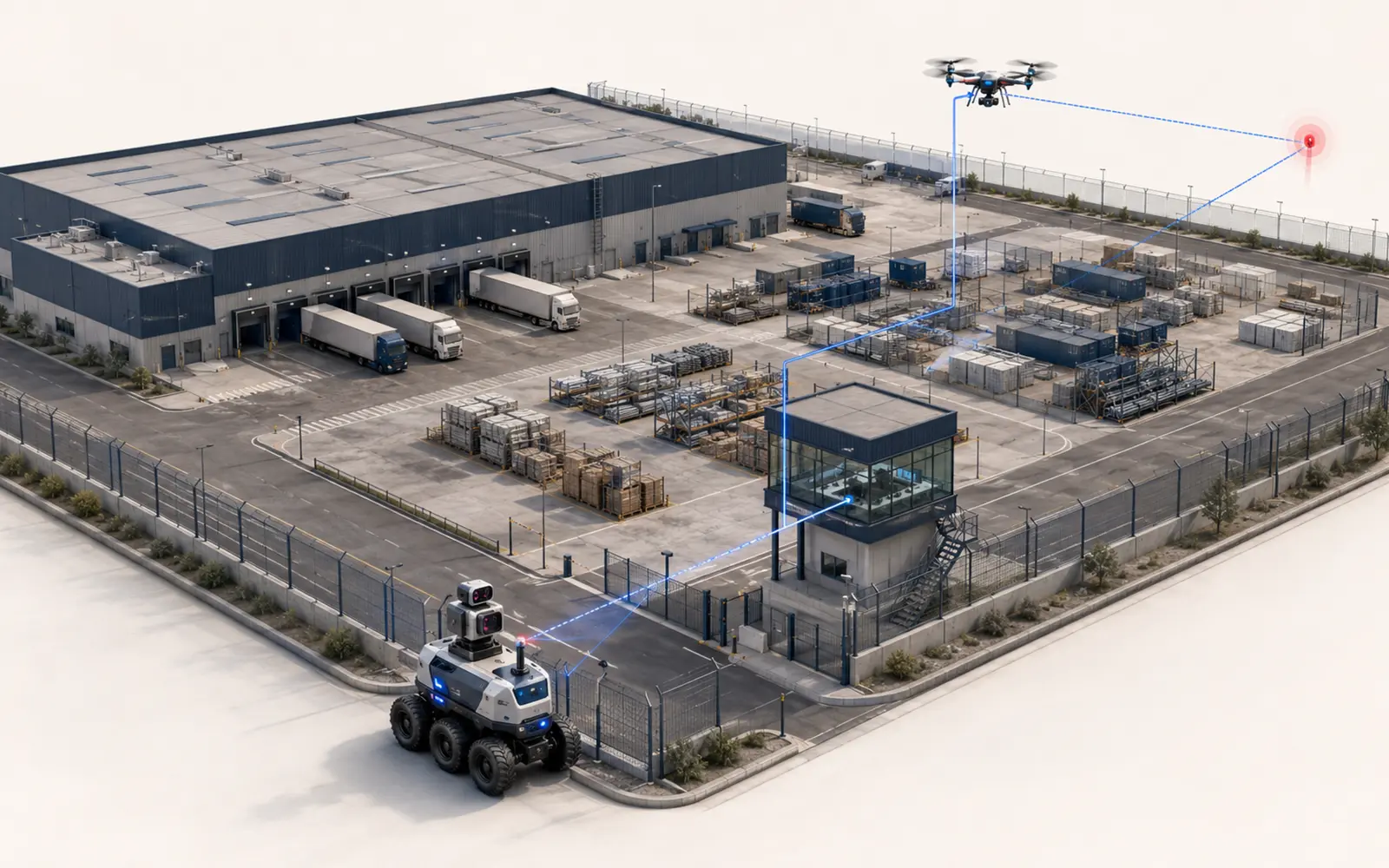
Fence line, gate, storage area or sensitive asset: each alert is linked to a defined zone and response scenario.
Robotic security for construction sites
Monitor access points, equipment and sensitive areas when work slows down or stops.
My Robot Guard assesses and pilots building site security robots in Switzerland, combining perimeter detection, mobile alarm verification and human oversight on suitable sites.
Your objective
A construction site can change every day. Fences move, access points evolve, materials arrive and traffic routes are reorganised. A robotic security system must keep pace with those changes without creating another risk for the workforce.
The project starts with specific scenarios: activity near the perimeter outside working hours, a gate left open, movement around stored materials, an alarm near parked plant or a distant fence that needs checking. Sensors flag the event. A robot may then move to a validated observation point and provide images to an operator.
Robotic patrols complement maintained fencing, lighting, access control, fixed cameras and security staff. They cannot guarantee that theft will not occur and do not replace construction-site management or occupational safety measures.
The first deployment should remain limited. A representative zone, defined operating hours and controlled scenarios make it possible to measure route reliability, alert quality and verification time before any expansion.
The challenge
01Perimeters, access points and storage areas change as work progresses.
02Plant, deliveries, excavations, cables and obstacles make routes variable.
03A night-time alarm rarely provides enough context for a remote decision.
04Security must protect the site without monitoring worker behaviour.
A purpose-built architecture
Fence line, gate, storage area or sensitive asset: each alert is linked to a defined zone and response scenario.
A robot moves between observation points on a controlled route, during approved hours and conditions.
A drone is considered only when the perimeter, weather, people present and Swiss aviation rules allow it.
An operator assesses the event, applies the response card and decides whether to escalate or intervene.
Use cases
Frequently asked questions
No system can guarantee that theft will not occur. A robot may increase patrol frequency, provide a mobile viewpoint and help an operator verify an alarm. It must complement maintained fencing, access control, suitable lighting, procedures and an available response capability.
That depends on people, plant movements, suspended loads, excavations and changing ground conditions. A pilot should begin in a controlled zone and time window. Routes, speed, safe stopping and right-of-way rules must be validated before the robot operates around other site users.
The platform depends on slope, surface, gravel, mud, steps, narrow passages and obstacles. A site visit and trials are required. The route must be reviewed whenever excavation, fencing or storage layouts change.
Technical capability alone is not enough. In Switzerland, the operation depends on the flight category, geographical zone, people present and whether the pilot maintains visual contact. Beyond-visual-line-of-sight flight falls under a more demanding framework. Weather, cranes, cables and emergency operations also need to be considered.
The purpose must be site security, not monitoring worker behaviour. Areas, operating hours, camera angles, access rights and retention periods are limited to what is necessary. People are informed before commissioning, and welfare areas or other irrelevant spaces are excluded.
The outage scenario is agreed before the pilot. The system should report its unavailability through an available channel, place mobile equipment in a safe state and activate the replacement human procedure. A patrol should not continue blindly in an environment that may have changed.
We select a limited perimeter, document the baseline, define scenarios and stop criteria, then test missions under several representative conditions. Results include completed missions, useful alerts, false positives, verification time, interruptions and human interventions.
Cost depends on the perimeter, terrain, sensors, connectivity, monitoring, enabling works, maintenance and project duration. A feasibility assessment can price a pilot and compare it with existing measures without assuming the outcome.
Assessment and pilot